
Columns by John

John Brown has been a wine and food columnist in West Virginia since the 1980’s. His regular columns appear in the Charleston (WV) Gazette-Mail under the title Vines & Vittles.

Wines for Caprese

I don’t know about you, but after a particularly good meal accompanied by a glass or two of fine wine, I can become pensive, reflective and downright hillbilly profound. One evening last week after such a repast, I came to the happy realization that, despite the troublesome distractions of the times, including wars, natural disasters, pandemics and global warming, it’s less than two months until the Backyard Brawl.

Perspective is important. For example, it has taken me several decades to accept these absolute truisms: there aren’t many things that I can control; and there are even fewer things I can depend on. So, it’s important to concentrate on the things we do have some ability to control -like the food we eat and the wine we drink.

We are blessed here in West Virginia with a substantial agrarian economy which produces a cornucopia of vegetables, fruits, meats and grains through the state’s many farmers’ markets. Here in Charleston, we have easy access to these local products at the Capitol Market. The Capitol Market’s outdoor vendors’ stalls are now overflowing with produce, and it’s prime time to take advantage of their bounty.

I’d like to share a simple, but delicious, recipe composed of ripe tomatoes, herbs, extra virgin olive oil, fresh mozzarella, basil, salt and black pepper. The Italians call this delectable concoction Caprese, and I’m sure many of you have consumed this delicacy. But you’re probably confused as to which, if any, wine can be appropriately paired with the dish.

image

Today, I’m going to recommend several wines that will complement and enhance this simple salad. Unlike other vegetable-centric dishes -like roasted peppers, squash, onions or broccoli- that can stand up to medium-bodied reds, Caprese is best enjoyed with crisp, dry white wines.

I start with sweet, ripe, red tomatoes such as heirlooms or beefsteaks. You can use yellow tomatoes, but they have less acidity, and I prefer red varieties, especially if you’re going to pair them with wine. Slice the tomatoes in rounds and place them on a large dish. Then, shake a good salt on them (I use our local J.Q. Dickenson finishing salt) along with a grind or two of black pepper. Next take a handful of fresh, locally grown basil, chop it coarsely and sprinkle it liberally onto the tomatoes.

Aside from the tomatoes, the most important ingredient in this recipe is the quality of the extra virgin olive oil you choose. I prefer to use Villa DiTrapano oil which is produced from olives grown on the property in Italy of a local Charleston family. This superb oil is available at the Capitol Market Wine Shop as well as from several other businesses around the city and state.

Finally, I’ll slice fresh mozzarella into half-inch rounds and place them onto the tomato slices. Then sprinkle a little more salt, black pepper, olive oil and basil on top the mozzarella.Of course, you’ll need fresh bread to accompany the Caprese, and to mop up the delicious tomato and oil residue on the plate. My favorite loaves (focaccia and baguette) are baked by Charleston Bread on Capitol Street right down from Capitol Market.

So, what about wine to accompany your Caprese? Red wines, even light ones, seem to overwhelm the delicate flavors of the dish. White wine is the best vinous accompaniment to Caprese, and I suggest unoaked, crisp, fruit forward varietals. Here are some of my favorites.
From Italy, try Fiano from the Campania region, Arneis and Cortese from the Piedmont and Verdicchio from the Marches. From southern France, Caprese pairs especially well with Grenache Blanc and Picpoul de Pinet. You might also try the delicate Tavel rose’ from near the Mediterranean coast. Finally, Albarino from Spain would be an excellent choice to accompany Caprese.

Enjoy

John Brown is also a novelist. His latest book Augie’s World, which is a sequel to his debut novel, Augie’s War. Both novels are available in print or audio  at Amazon. You can find out more about his novels and wine columns at wordsbyjohnbrown.com


Red wine and serving temperature: The Truth!

So, there I was: sitting at a table under a multi-colored umbrella on the deck of a semi-high-class eatery. The weather was very warm, but pleasantly dry, and I had a hankering for a wine that -given the climate and my menu selection– probably qualified as a counterintuitive choice. I wanted a glass of red wine to accompany the grilled octopus I had ordered.

“Are you sure about that, sir?” my officious wait person asked in a snickering and patronizing voice. “I have a lovely pinot grigio which would pair much better with our polpo alla griglia,” he added with a bit of a flourish, obviously flaunting his Italian linguistic skills.

I smiled up at the fellow and repeated my request, disregarding the look of disdain and disapproval on his face. In a few moments he returned with my glass of pinot noir and then left in a huff. The wine was tepid, almost warm. I waved my waiter over and asked if he had any bottles of red that were a bit cooler. I didn’t even ask for pinot noir. I just wanted a glass of red – any red – that would provide a bit of cooling contrast to the grilled octopus.

image

Without hesitation, he scolded me with the standard (and archaic) reply that red wine should be served at room temperature. I didn’t bother to remind him that we were outside, and that the temperature was 90 plus degrees Fahrenheit. I just asked him to bring me a glass of ice and a spoon. Of course, he was appalled when I proceeded to add two or three cubes to my pinot noir, stirring the wine for a few seconds before retrieving what was left of the ice from my glass.

I know I’ve written about red wine and proper serving temperature before, so I won’t go into any more detail on the subject other than to remind you that the above-mentioned adage was first uttered in the 1500’s. Rooms back then were a lot cooler -even in the summer. The most compatible wine and food pairing cannot overcome a red that is served too warm. The only way to enjoy a red wine that is served too warm is to have your waiter take it back and put it in ice or ask for an ice bucket. At home in the summer, I always put the red I intend to open at dinner in the refrigerator for about a half hour. However, if you’re in a restaurant and the red you’ve ordered by the glass is warm, don’t be afraid to ask for some ice and a spoon. You may get some strange looks, but you’ll be a lot happier with the wine.

Most often, red wine is chosen to enhance meals with some type of protein, usually beef, pork, lamb or even fish such as salmon. But you can also use reds to pair with grilled or sauteed vegetables. I love to drink red wine with one of my all-time favorite dishes: fried peppers, Italian style.

Here’s the simple, but delicious recipe. You’ll need at least two red, yellow and green bell peppers, two or three hot banana peppers as well as salt, black pepper, onions, garlic, basil and parsley. Slice the all the peppers in three-inch-long pieces, discarding the seeds, and then coarsely chop one large onion. Using a cast iron skillet, heat about a quarter cup of olive and add the peppers and onions, at medium-high heat, to the pan. After about five minutes, add three cloves of coarsely chopped garlic to the mix along with several shakes of salt and black pepper. Stir often so the veggies don’t burn, but you’ll want them to get slightly scorched. Once the peppers are cooked, plate them and add freshly chopped basil and parsley to the mix. Serve the peppers with crusty bread and enjoy.

Here are two red wines that really enhance the recipe above. And, of course, they should be served slightly chilled.

2019 Castello di Bossi Chianti Classico ($23) – From Tuscany, this 100 percent Sangiovese is the essence of why Chianti Classico is such a wonderful accompaniment to food. It’s medium-bodied, but ripe, with flavors of dark plums, a touch of anise and a kiss of oak. Perfectly balanced, the wine pairs seamlessly with the tangy fried pepper concoction.

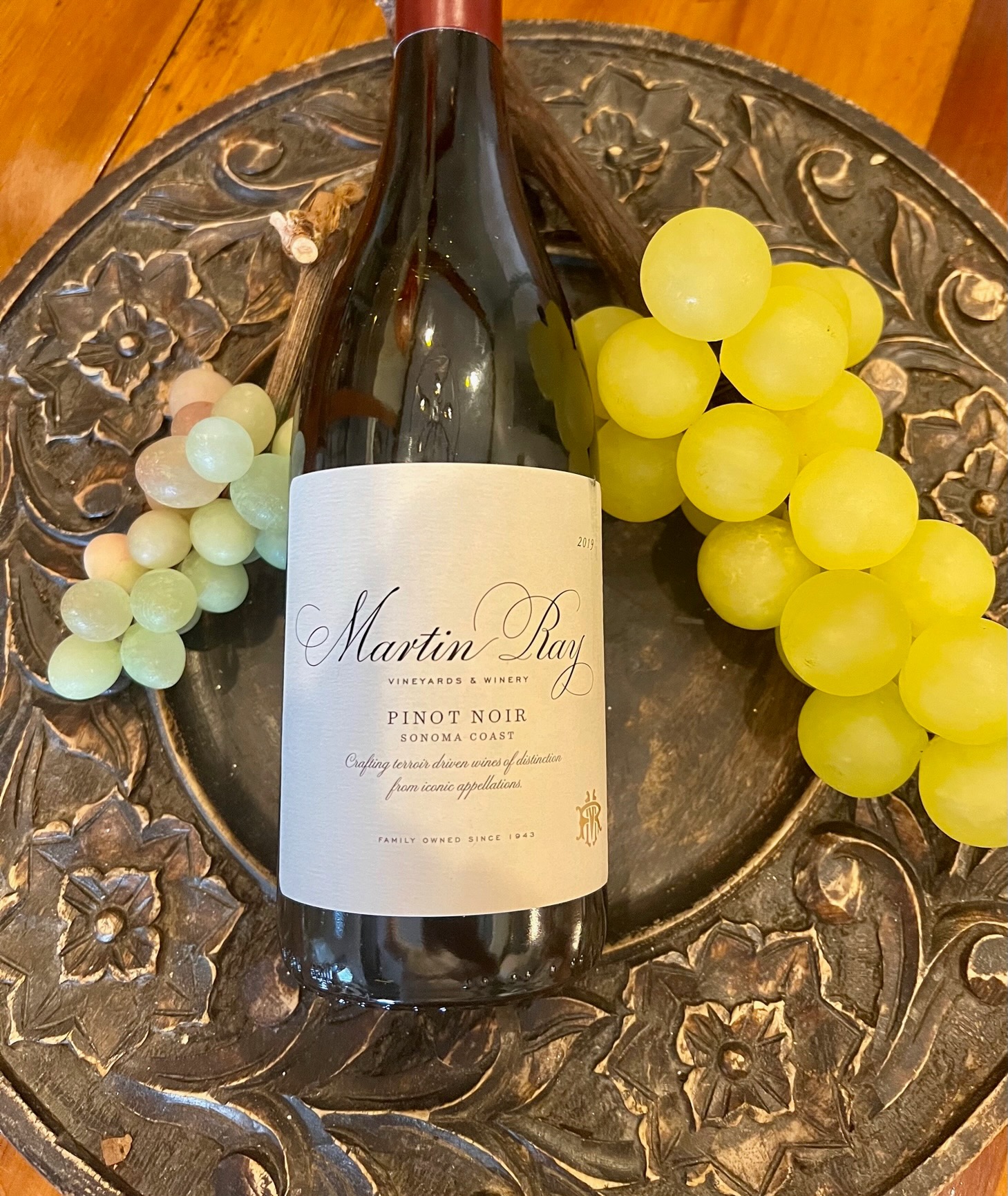
2020 Martin Ray Sonoma Coast Pinot Noir ($21) Ripe red cherries and hints of cinnamon highlight this fruit forward pinot noir. The wine has a silky texture and is perfectly balanced from grapes grown in the cool temperatures of the Sonoma coast. This pinot noir provides a refreshing counterpoint to the rich and spicy flavors of the fried peppers

John Brown is also a novelist. His latest book Augie’s World, is a sequel to his debut novel, Augie’s War. Both novels are available in print and audio  at Amazon. You can find out more about his novels and wine columns at wordsbyjohnbrown.com


Youth Movement needed in wine industry!

I came of age during a time when beer was… well… just beer. Oftentimes, the suds were chased with a shot glass full of cheap hootch. Heck, if you ever wanted something other than cold, yellow, pilsner in my neighborhood, you had to wait until Christmastime when a regional brewer produced something called “Old Frothingslosh.” One of the taglines in the commercials for Old Frothingslosh read: “A whale of an ale for the pale, stale, male.” Another one read: “A beer so light the foam is on the bottom.”

Aside from unconventional (and apocryphal) brews like Old Frothingslosh, beer remained predictable (and boring) in this country with most of the suds mass-produced by large industrial type breweries. That is, until the past couple of decades when enterprising beer lovers re-invented the business by creating a new category of products called craft brews.

Since then, craft breweries have sprung up in great numbers all over the US with more than 25 such businesses now operating in West Virginia. These new businesses have taken beer to a whole new level by qualitatively improving traditional brews like pilsners, stouts and ales, and by developing unique products using non-traditional ingredients such as fruits and herbs.

image


Okay, you’re probably thinking: why is this wineaux (that’s French for wino) spending so much time on beer? Well, I have confession to make, I actually like beer, especially the stuff being made by West Virginia craft breweries such as Stumptown Ales in Davis and Weathered Ground in Ghent. But, let me be clear, I do prefer the taste of wine over beer, particularly when it comes to pairing either beverage with food. However, I must give credit where credit is due. Simply stated, the wine industry is stagnant and seems content to appeal to those of us who are predominately long in the tooth.

Craft brewers, conversely, have captured the imagination and palates of people who, statistically, will be on this planet much longer than those of us to whom the wine industry, stubbornly, continues to market. I certainly hope that my intuition and subjective assessment of the situation is wrong, but I don’t see many young adults at the numerous wine events, such as tastings and dinners, that I attend on a regular basis. And that’s unfortunate because I’ve never witnessed a more extensive variety of good to great wine that’s now available in the marketplace – and at very reasonable prices.

I’m not sure what advice to give to those institutions charged with the long-term survival and growth of the wine industry except to suggest they somehow find a way of making the product less intimidating. A good place to start might be to improve the information on the wine bottle’s label. Instead of the usual mumbo-jumbo label info (most of which is written in a foreign language), wineries could provide food pairing suggestions, appropriate serving temperatures and/or ways to preserve leftover wine to enjoy another day.

If all else fails, maybe we can appeal to the younger generation by developing a wine version of Old Frothingslosh. We might call it “Old Bacchus Sauce “– a wine so heavy the sediment settles on top! But hey, brothers and sisters of the vine, you can be assured I’m not letting up on my evangelistic zeal for wine. As a matter of fact, here are two wines I’ve tasted recently that have pleased my palate. Give them a try. I think you’ll like them too.

2019 Gary Farrell Russian River Chardonnay ($36) -With aromas of green apples and lightly toasted bread, this Sonoma County chardonnay is both rich and well-balanced. Tropical fruit, spice and nuances of vanilla characterize this lovely mouthful of wine drawn from vineyards close to the Pacific Ocean. Try it with sauteed crabcakes drizzled with a remoulade sauce.

2016 Chateau Laforge ($40) – From Saint-Emilion in Bordeaux, this Grand Cru blend is comprised of merlot with just a little touch of cabernet franc. The wine is ripe, rich and full of dark berry flavors with velvety tannins. It drinks more like a Napa merlot than something from Bordeaux. Pair this wine with grilled lamb chops marinated in olive oil, lemon, rosemary, garlic and Dijon mustard.

John Brown is also a novelist. His latest book Augie’s World, is a sequel to his debut novel, Augie’s War. Both novels are available in print and audio  at Amazon. You can find out more about his novels and wine columns at wordsbyjohnbrown.com


Pairing Hillbilly Chili with… wine?

Obsessed as I am with eating and drinking well, I make a conscious effort to not only pair wine with the food I consume, but also to match these pairings with the seasons of the year. You would think the occasional sideways glance in a full -length mirror would disabuse me of this obsessive tendency, but it does not. Right now, the daily recipes at Chez Brown are morphing from the warm weather, lighter-type meals of summer to the heartier fare of fall. So, the white and red wines I choose to pair with autumn meals are necessarily fuller bodied – kind of like me!

Soups and stews are among the most desirable transition foods to experience in autumn, and good, old American chili tops my list of fall culinary delights. While many folks prefer beer as the go-to beverage for chili, I’m going to suggest that you consider wine to accompany this spicy, vegetable and meat concoction, especially when you pair it with my own recipe below. As a matter of fact, chili is the reason I started writing about wine. Confused? Let me explain

Back in 1981, I won the state chili cookoff at Snowshoe and then represented West Virginia at the World Chili Championship in Los Angeles. I also convinced some friends to join my wife and I in LA where we all had a great time (from what I remember), but, not surprisingly, my chili didn’t win. Afterward, we rented a van and spent the next week touring the wine country of Napa and Sonoma where we tasted at some of the greatest wineries in California. When I returned to Charleston, I happened to mention to Daily Mail city editor (at the time) Sam Hindman that the paper should have someone write about wine and the nascent wine industry. Sam suggested that I do it, and the rest, as they say, is history.

image

In addition to the chili that I prepared at Hollywood Race Track that day, there were also awards for categories like unique costumes, best decorated booths and most clever skits. Our group decided to do a short skit entitled: Hillbilly Chili – The Real McCoy.” Based on the hit TV show of the time, “The Real McCoy’s,” I’m ashamed to admit we looked like moonshiners dressed in bib overalls and wearing pointy hats. We even blacked out our teeth to further solidify the stereotypical view all outsiders had about West Virginians. Mea Culpa!

So, what wines pair well with chili? I generally use medium to full-bodied reds such as zinfandel, Cotes du Rhone or Valpolicella. You might try these: Terra d’Oro Zinfandel; Saint Cosme Cotes du Rhone; and Allegrini Valpolicella Classico. I also recommend sparkling wines with chili because their refreshing and thirst -quenching qualities present a nice counterpoint to this spicy dish. Here are a few sparklers that work well: Segura Viudas Cava from Spain; Gruet Blanc De Blancs from New Mexico; and Saint-Hilaire from France. All the wines listed above are priced under $30 a bottle.

My recipe below does not include beans because they were not allowed to be used in the chili cookoff competitions. However, feel free to add them if you wish.

Hillbilly Chili (The Real McCoy)

Ingredients:

Two pounds bottom round beef roast cut into one-half inch quarters

One pound each coarsely ground hamburger (chuck) and pork

One onion, one jalapeno and one red bell pepper coarsely chopped

Two cloves of garlic minced

One can each tomato paste, chopped green chilies and beef bouillon

Three slices of thick cut bacon chopped

Two ounces of canola cooking oil

One tablespoon each kosher salt, ground black pepper, ground cumin and cayenne pepper

Two tablespoons of honey

Two tablespoons of chili powder

Two twelve-ounce cans of pilsner beer

One large cooking pot

Preparation

Sauté onions, garlic and peppers in canola oil and put in cooking pot

Season above ingredients with salt, pepper, cayenne, and cumin

Sauté bottom round, hamburger and pork, add chili powder, drain most fat and put in pot

Cook bacon, drain fat and add to pot

Add honey, beer, bouillon, tomato paste to pot and bring ingredients to boil

Lower heat and simmer chili, adjusting spices, for two hours or until meat is tender

John Brown is also a novelist. His latest book Augie’s World, is a sequel to his debut novel, Augie’s War. Both novels are available in print and audio  at Amazon. You can find out more about his novels and wine columns at wordsbyjohnbrown.com


INTRODUCING: Wine and Dine

johnbrown.jpgWelcome to 'Wine and Dine,' a new Charleston Gazette blog about wine selection and advice, along with tips on pairing wine with food. John Brown is a seasoned wine columnist, whose writing on wine will also be seen in the Sunday Gazette-Mail on a regular basis. Also, we will be rolling out some wine tips on video and taking some multimedia journeys in search of the best places to enjoy wine in the West Virginia region. We welcome your feedback on this new blog, either in the 'Comment' section below each post or by sending your comments to This email address is being protected from spambots. You need JavaScript enabled to view it.

Douglas Imbrogno | thegazz.com editor