
Columns by John

John Brown has been a wine and food columnist in West Virginia since the 1980’s. His regular columns appear in the Charleston (WV) Gazette-Mail under the title Vines & Vittles.

Pork Milanese

My brother fancies himself a gourmet cook, but rather than disagree with his delusion, I usually just nod and let him go about blissfully concocting his latest comestible contrivance. I must admit, though, that he does usually deliver on his culinary creations, but the kitchen devastation left in his wake requires HazMat-like intervention to clean and reassemble.

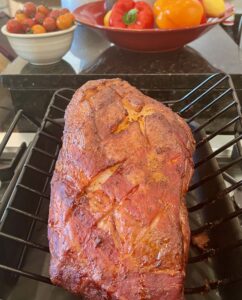
However, one such dish was so good that I did what all male siblings unabashedly do: I claimed it for my very own. And today I’ll share that recipe with you and tell you what wines to pair with it. This recipe is actually a knock-off of a famous Italian dish called Cotoletta alla Milanese (or Veal Milanese). Today’s dish, Pork Milanese, substitutes pork chops for veal and is not only delicious, but significantly less expensive to prepare. My brother’s version (see photo) features a bone-in pork tomahawk, but my recommendation is to use bone-in, center cut pork chops that are equally delicious, much less expensive and readily available at most grocery stores.

Pork Milanese – Molto Bene!

Another advantage of Pork Milanese is that it can be paired with both white and red wines. White Italian wines such as Verdicchio from the Marche region or Arneis from northern Italy would be excellent choices. Try 2023 Bisci Verdicchio di Matellica ($20) or 2023 Michele Chiarlo Le Madri Roero Arneis ($28). Lighter styled reds such as pinot noir or Sangiovese will work well too with this dish. Try 2022 La Crema Anderson Valley Pinot Noir ($25) or 2023 Antinori Peppoli Chianti Classico ($26).

Pork Milanese
Ingredients
Four bone-in center cut pork chops – half inch or less
One cup flour
One teaspoon of Kosher salt and ground black pepper
Two large eggs
One cup panko or other breadcrumbs
Four ounces of grated parmesan cheese (Reggiano if possible)
Two ounces extra virgin olive oil
Four sage leaves and four sliced lemon rounds

Preparation
Place the pieces of pork between sheets of plastic wrap
Use a meat mallet and pound the pork into ¼-inch thick cutlets
Whisk the flour, salt, and pepper together in a small bowl
Stir and beat the eggs in a separate bowl
Combine breadcrumbs and cheese in another bowl
Dredge chops: first in flour, next in eggs and then finish in breadcrumbs
Heat olive oil in a large skillet, sauté sage leaves for 30 seconds and remove from pan
Pan-fry the breaded cutlets until each side is golden brown
Add sage leaves to each cutlet and serve with fresh lemon rounds

John Brown is also a novelist. His latest book – Augie’s Wine –is now available to order online or at his website wordsbyjohnbrown.com. His first two books– Augie’s War and Augie’s World – are also available online and at bookstores around the state. You can find out more about his novels, and review all of his archived Vines & Vittles columns at wordsbyjohnbrown.com

The pairing versatility of Oregon Pinot Noir

The best summertime red wine that pairs well with the widest variety of meals from salads to pastas is pinot noir. Of course, the most revered pinot noir in the world is produced in the Burgundy region of France, but only Russian oligarchs and Saudi princes can afford to drink that stuff on a regular basis.

And with all due respect to Burgundy, there have been other pinot noir producers, principally in the US, that have begun to challenge the vinous supremacy of France to make exceptional wine. The most accomplished region to give the Burgundians a run for their money is Oregon where the pinot noir grown and crafted in the Williamette Valley is not only qualitatively competitive, but also within the economic reach of most wine lovers.

The northern Willamette Valley, just south of Portland, is where the most famous Oregon wineries are located within several American Viticultural Areas (AVA’s), including Chehalem Mountains, Dundee Hills, Eola-Amity Hills, McMinnville, Ribbon Ridge, and Yamhill Carlton. Within these AVA’s, more than 700 wineries produce pinot noir. From a taste perspective, Oregon pinot noir combines the fruit and richness of California pinot with the earthiness, balance and elegance of Burgundy.


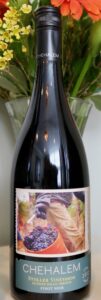
Chehalem Willamette Valley Pinot Noir

This summer my wife and I have had the pleasure of matching Oregon pinot noir with a variety of meals at home, and we have also paired them with some of the best entrees at several local restaurants. I’m always amazed at the quality of restaurants in Charleston, and Huntington too, and the chefs who create their menus. Paul Smith owner of 1010 and Paulies Fine Italian as well as Chase /Collier of Ristorante Abbruzzi have both been recognized nationally by the James Beard Foundation for their culinary excellence.


Chef Noah’s Chanterelle Pasta

Chef Noah Miller of Noah’s Restaurant in downtown Charleston is equally masterful in preparing unforgettable meals. One I enjoyed recently had as it’s delicious and rare centerpiece locally foraged chanterelle mushrooms. Chef Miller actually picked the mushrooms in the forest adjacent to his home and then added the chanterelles to a mouth-watering, creamy pasta dish with which we paired pinot noir. It was an absolutely stunning food and wine combination.

Here are some of my favorite Williamette Valley pinot noirs that you should consider adding to your summertime menus or as accompaniments to restaurant meals: Ken Wright Cellars, Domaine Drouhin, Cristom Vineyards, Chehalem Winery, Adelsheim Vineyards, Domaine Serene, The Eyrie Vineyards and Penner-Ash Wine Cellars. Enjoy!

John Brown is also a novelist. His latest book – Augie’s Wine –is now available to order online or at his website wordsbyjohnbrown.com. His first two books– Augie’s War and Augie’s World – are also available online and at bookstores around the state. You can find out more about his novels, and review all of his archived Vines & Vittles columns at wordsbyjohnbrown.com


Que Sera, Syrah!

One of my pet peeves with the wine industry over the years has been their occasional practice of inventing a new term to describe an already defined word. This results in only further confusing we already bewildered American wine consumers who must regularly deal with labels in foreign languages and nonsensical descriptions of wines as being “ethereal.” Anyway, I was reminded of this recently when someone asked me to describe the difference between red wines syrah and shiraz. Well, for those of you who don’t know, syrah is the world-famous grape that has been grown and produced in the Rhone Valley of France for centuries.

Shiraz, on the other hand, is an invented word that some wine marketer decided to call the syrah made in Australia and South Africa – and now sometimes even in California. You won’t see the word syrah mentioned on any Rhone label because the wine there is identified by the producer and the place (like Cote-Rotie or Cornas) but most red wine from the region will be comprised of that grape. I mention this because if you don’t sip syrah, or even the stuff labelled shiraz, you’re missing out on wines that, while different in name, place and in the way they’re vinified, are both excellent and worthy of your exploration.

The best Rhone producers are E. Guigal, Paul Jaboulet Aine, M. Chapoutier, J. Vidal-Fleury and Delas Freres. These wines are more restrained, complex and less highly alcoholic than most of the Australian, South African and American versions of the syrah called shiraz. In the US, wine labelled as syrah was not widely available until the 1980’s when the “Monty Python” of California wine makers, Randall Graham (Bonny Doon Vineyards), was one of the first to introduce syrah and other Rhone varietals to California. If you’ve never read one of Graham’s pun-filled, semi-wine related, opera-inspired tomes, you’re missing a great opportunity to add knowledge and humorous wine education tidbits to your appreciation of the fruit of the vine. Check out his book: “Been Doon So Long.” It’s a riot!

Two Australian Shiraz worth seeking out

If you would like to sample syrah from California, some of my favorite labels are Qupe, Onx, Ascent, Cayuse, Babcock, Alexander Valley Vineyards and Beckman. The Australians, particularly in the Southeastern Barossa region around Adelaide, make a fuller-bodied style of shiraz. My favorites from Down Under are Clarendon Hills; Torbreck Woodcutters Red, Penfolds Kalimna, Lindemans Bin 50, Elderton and d’Arenberg The Dead Arm Shiraz. Whether you call it syrah or shiraz, go out and experience the tasteful versatility of these delicious wines.

                                                                                                                    ***
I remember a time – just a couple of decades ago – when perusing a wine list in a West Virginia restaurant took about ten seconds. The choices usually included a “house” white, red and rose’ usually supplied by some mega jug wine producer in California. If you wanted a varietal like pinot noir or chardonnay, the wine list might have a “Burgundy” red or a “Chablis” white. If you wanted anything more upscale, you’d need to drive over to The Greenbrier. But thankfully, times have changed, and our state boasts some excellent restaurants that feature a wide selection of domestic and international wines. To recognize restaurants that have the most exceptional wine lists, each year Wine Spectator Magazine singles out eateries for special awards.

Congratulations to four West Virginia restaurants that have been recognized by the Wine Spectator for having award worthy wine lists. The Final Cut Steakhouse at Hollywood Casino and Racetrack in Charles Town received a “Best of award of Excellence” while three other state restaurants rated an “Award of Excellence,” including The Wonder Bar Steakhouse in Clarksburg, Bistro 112 in Shepherdstown and Sip Downtown Brassiere in Huntington.

And a special shout out to The Wine Down, Charleston’s new wine bar at 114 Washington Street West in Elk City. Open most afternoons and early evenings, The Wine Down features a rotating selection of reds, whites, sparklers and rose’s along with charcuterie plates and other wine friendly small tapas-like dishes to pair with their eclectic and always changing list. Check it out.
John Brown is also a novelist. His latest book – Augie’s Wine –is now available to order online or at his website wordsbyjohnbrown.com. His first two books– Augie’s War and Augie’s World – are also available online and at bookstores around the state. You can find out more about his novels, and review all of his archived Vines & Vittles columns at wordsbyjohnbrown.com

John Brown is also a novelist. His latest book – Augie’s Wine –is now available to order online or at his website wordsbyjohnbrown.com. His first two books– Augie’s War and Augie’s World – are also available online and at bookstores around the state. You can find out more about his novels, and review all of his archived Vines & Vittles columns at wordsbyjohnbrown.com


A summertime meal: Beauty and the Beast?

Once the weather moderates, some folks can’t wait to hit the pool, dust off the old golf clubs or dig in the dirt and plant things. Not me. Warm weather gets me in the mood to create delicious  salads and follow that course up with a stick to your ribs, spicy and hearty entrée of grilled meat or fish. Of course, then I get to enjoy pairing the courses with wines that further enhance the enjoyment of this summertime meal.

I’ll admit right up front that the two courses I’m suggesting you try are a bit odd (kind of like beauty and the beast), but, honestly, they really work well together. And the wines I’m recommending – both white and red – will benefit from a little chilling in the refrigerator before serving. So here we go.

Salad

The sine qui non of summer salads for this Italian American is Caprese. Visit the Capitol Market in Charleston where you’ll be able to buy the ingredients for this quintessential summer treat. Slice ripe tomatoes into quarter inch rounds and drizzle them with extra virgin olive oil like the exquisite one, Villa DiTrapano, harvested and produced by local owners. Then sprinkle the tomatoes with artisan sea salt from JQ Dickinson. Finally cover the tomatoes with fragrant basil leaves and fresh buffalo mozzarella. The etymology of Caprese translates to “of or near the Island of Capri” so I suggest pairing the dish with either of these two Italian white wines:

2022 Mastroberardino Falanghina ($23) Grown and produced in the hills above Naples. The wine features ripe apple flavors and floral notes with bright acidity, and it complements the Caprese beautifully.

2023 Bisci Verdicchio di Matelica ($25) Vinified in eastern Italy between the mountains and the Adriatic Sea. This delicate white wine has fresh, bright citrus flavors with a distinct nuance of almonds. A bit rounder than the Falanghina, it’s also a great accompaniment to Caprese.

Caprese – Edible Art

The Entree

Baby back (pork) ribs are my favorite meat to barbecue on an outdoor grill. And I prefer to use charcoal when grilling baby backs because of the smokiness it imparts to the meat. You can also get good results by using a metal smoking box filled with wood chips that is placed inside a gas grill. Either method will give you good results. Here’s my recipe for grilled baby back ribs that’s easy to prepare and delicious to eat. Purchase a rack or two of baby backs General Steak and Seafood  and Johnnie’s Meat Market -both in Charleston – are my go-to purveyors.

Next, make a dry rub consisting of one tablespoon each of cumin, chili powder, kosher salt, coarsely ground black pepper, brown sugar, smoked paprika and cayenne pepper. Rub this onto both sides of the ribs and then slow cook the ribs indirectly (placing them away from direct heat) for three hours. About 15 minutes before the ribs are cooked, baste both sides with a store bought or homemade barbecue sauce. Here’s my recipe for a delicious sauce: Combine a cup of ketchup with half a cup of white vinegar in a cooking pot. Add a bottle of pilsner or light beer into the pot along with a tablespoon each of brown sugar, molasses, dried mustard and bring the sauce to a boil. Allow it to simmer for about 20 minutes before basting it on the ribs.

Oregon pinot noir and Cotes Du Rhone from France wines are my choices to accompany just about any barbecue, and especially grilled baby backs. Try either (or both) of these wines:

2023 Argyle Pinot Noir Willamette Valley ($27) This Oregon pinot noir has spicy, bright red cherry flavors and excellent acidity that balances and enhances the richness of the baby backs.

2022 Saint Cosme Les Deux Albion ($23) – This southern Rhone red is a blend of mostly syrah and grenache that is fermented in open cement vats and then aged briefly in stainless steel. What you get are pure, deep, dark fruit flavors with freshness that marry exceptionally well with the sweet and smoky baby backs.

John Brown is also a novelist. His latest book – Augie’s Wine –is now available to order online or at his website wordsbyjohnbrown.com. His first two books– Augie’s War and Augie’s World – are also available online and at bookstores around the state. You can find out more about his novels, and review all of his archived Vines & Vittles columns at wordsbyjohnbrown.com

Wines of France; and how the French gave American wine credibility


On May 24th, American wine lovers should raise a glass to celebrate the most momentous occasion ever for American wine. I’m referring to “The Judgement of Paris” where a gaggle of California wineries were pitted against the greatest French wines from Bordeaux and Burgundy in a blind tasting in the ‘City of Light.’ On that day, the all-French tasting panel awarded first place for both the red (1973 Stags Leap Cabernet Sauvignon) and white wine (1973 Chateau Montelena Chardonnay) to these California wineries. The results of that tasting conferred worldwide credibility to the nascent California wine industry.

I’ve often poked fun at the French for their superior attitude, especially when it concerns anything to do with wine. However, it’s important to acknowledge the tremendous contributions France has made in producing some of the greatest wines, and for their vineyard and cellar innovations over the past several centuries. Today, I’ll give you quick primer on the major wine -producing regions of France and tell you about the principal grape varieties that grow there.

There are several distinct wine appellations in France and hundreds of smaller sub-regions within those broader areas, but here are the most prominent ones.

Alsace – In the eastern part of the country,Alsace  is known for its full-bodied and food-centric white wines such as are pinot blanc, pinot gris, riesling, gewürztraminer, and sylvanner. The only red grape produced is there (and in very small quantities) is pinot noir.

Bordeaux – In this most famous of all wine regions, you’ll find the most famous of all red wines such as Chateau Lafite Rothschild and Chateau Petrus. The reds are usually blends of cabernet sauvignon, merlot, cabernet franc, petit verdot and malbec. The white wines of the region, sauvignon blanc and semillon, are often blended.

Bordeaux Red-1982 Ch. Mouton Rothschild

Burgundy – When I first started drinking wine in the last century, most Americans thought Burgundy was a hearty red wine in a big green jug. Of course, Burgundy is a very renowned French wine region where some of the world’s greatest wine is produced. In northern Burgundy, red wine is made from pinot noir, and the white is principally chardonnay with lesser plantings of pinot blanc and aligoté. Beaujolais, in southern Burgundy, is made from the red grape gamay.

Champagne – Interestingly, two-thirds of the grapes that produce Champagne are reds pinot noir and pinot meunier. The white grape of the region is chardonnay that is blended with the two reds to make this world-famous sparkling wine.

Languedoc Roussillon – Located in south central France along the Mediterranean coast, this warm region produces surprisingly excellent wines at value prices. The reds are made from carignan, syrah, grenache and cabernet sauvignon while the main white grapes are chardonnay, chenin blanc, muscat and picpoul.

Loire – The Chateau country of the Loire Valley is a beautiful region where white wine is more prominent than red. The whites, chenin blanc and sauvignon blanc, are the dominate varietals. The most famous red wine in the Loire is called Chinon and is made from cabernet franc.

Provence – Directly to the east of Languedoc, much of Provence lies along the French Riviera. Rose is the most famous wine of the region and can be made from a variety of grapes, including grenache, syrah, and mourvedre. The whites are comprised of ugni blanc and clairette.

Rhone– The Rhone Valley begins just south of Lyon and extends to near the city of Avignon. The reds of the Rhone are comprised of syrah, grenache, mourvedre and carignan. The most famous wine of the Rhone is Chateauneuf Du Pape. The principal white grapes of this large region are clairette, grenache blanc, marsanne, rousanne and viognier.

The Southwest -The wines of the Southwest are comprised of the sub-regions Dordogne, Bergerac, Garone, Gascony, Bearn and the Basque country. The main varietals are reds such as cabernet sauvignon, merlot and cabernet franc and whites made from sauvignon blanc and semillon.

John Brown is also a novelist. His latest book – Augie’s Wine –is now available to order online or at his website wordsbyjohnbrown.com. His first two books– Augie’s War and Augie’s World – are also available online and at bookstores around the state. You can find out more about his novels, and review all of his archived Vines & Vittles columns at wordsbyjohnbrown.com