
Columns by John

John Brown has been a wine and food columnist in West Virginia since the 1980’s. His regular columns appear in the Charleston (WV) Gazette-Mail under the title Vines & Vittles.

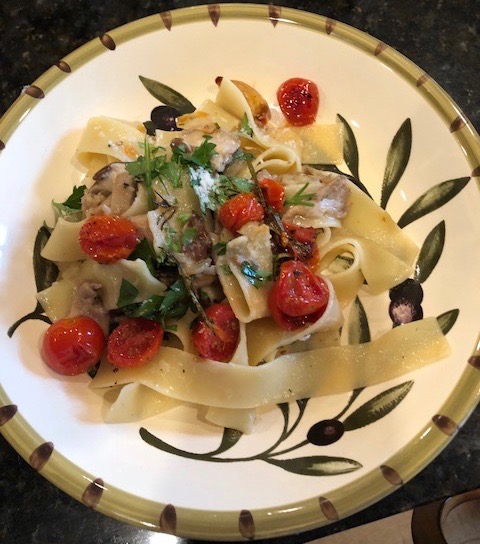
Grandma's Marinara

It's almost Columbus Day and in a tribute to that intrepid (if flawed) explorer, and to all things Italian, I will share with you a simple, but exquisite, recipe for making the perfect marinara sauce.

But first, let’s take a candid look at Christopher Columbus. Columbus spent most of his adult life trying (unsuccessfully) to convince the Italian government to underwrite a voyage to India where he promised to procure all manner of exotic spices. Undaunted, Columbus then went to Portugal where he lobbied King Ferdinand and Queen Isabella.

He pestered the king and queen so relentlessly that they finally gave in, secretly hoping that he, along with the Nina, Pinta and Santa Maria, would sail out of their lives and off the end of the world – which, of course, was flat back then.

You have to give it to Columbus, though. He was persistent and ultimately successful. But you also have to admit he was directionally challenged. Here’s a guy who traveled west to find a quicker route to the east and ended up discovering north…. AMERICA? But thanks to Columbus, my Italian grandparents also took the voyage from Europe to America, and I exist because of them - and him.


I have a multitude of wonderful memories of my Italian-American family, and of growing up in the North View section of Clarksburg. One of my most cherished and enduring recollections, though, is of my Grandma in her kitchen, lovingly making her delectable marinara sauce. The recipe below is a close approximation of her simple, yet delicious, creation.

One quick note about wine pairings with pasta marinara: You don’t necessarily need to use Italian wine. Any medium to full-bodied red will marry nicely with the spicy tomato sauce featured below. Here are two wines – one from Italy and one from France, you might consider.

2015 Domaine Lafage Bastide Miraflors Rouge ($17) – Composed of 70% syrah and 30% old vine grenache, this southern French red has loads of ripe blueberry and blackberry flavors. It is also spicy and a perfect match to the flavors in the marinara.

2014 Castello Di Albola Chianti Classico Riserva ($22) –This medium-bodied red has scents of new oak, and is an elegant and ripe sangiovese-based wine. Paired with Grandma’s marinara, the combination is truly simpatico.

Grandma’s Marinara
Two 28-ounce cans of San Marzano Italian whole tomatoes
One medium onion diced
One red bell pepper and one carrot diced
One hot Hungarian banana pepper diced (optional)
Four cloves of minced garlic
Two ounces each of fresh chopped basil and Italian parsley
One tablespoon of kosher salt
One teaspoon of coarsely ground black pepper
One-half teaspoon of ground cayenne or red pepper flakes (optional)
One-quarter teaspoon of dried oregano
One-quarter cup of extra virgin olive oil
One medium sized Hollywood pork boneless rib
One-quarter cup of Balsamic vinegar
One pound of linguini or fettuccine pasta
One half cup of grated pecorino romano cheese
One cup of grated parmesano reggiano cheese

How to:
Sauté the pork rib in olive oil in a large pot until browned on all sides
Remove pork from pot, add onions, peppers, carrots and sauté until translucent
Add garlic, salt, black pepper and dry oregano to pot
Open cans of tomatoes, add to pot and use a large fork to break up tomatoes
Add the fresh basil and parsley along with cayenne or red pepper flakes
Add Balsamic vinegar, pork rib and pecorino romano to the sauce
Cook over medium heat for 1/12 hours, stirring regularly
Place pasta in boiling water, cook until al dente and drain in a colander
Add half the marinara and all the pasta to a large sauté pan
Over low heat toss the pasta in the marinara to mix completely
Plate immediately adding more marinara sauce
Top the pasta marinara with grated parmesano reggiano

Malbec - better than ever!

I had never been a great fan of malbec, a grape that traditionally served as one of the five vinous components in red Bordeaux. Malbec is used to add weight and color to the Bordeaux blend, which may also be comprised of varying amounts of cabernet sauvignon, cabernet franc, merlot and petit verdot.

But, in the past few decades, malbec has helped put Argentina on the world wine map as a single varietal. Malbec was first planted there in the late 1800’s, but it languished for decades as just another red wine. However, in the 1990’s vintners began to adopt better vineyard practices and started using up-to-date wine making equipment to produce a malbec that quickly became an international favorite.


But I had never been fond of the wine. It seemed to me to be a bit over done, too rough around the edges and too tannic for my palate. I tried several different producers’ wines, but most of what was being made was just “too in your face” for me.

But a few years back, things began to change for the better. Some producers, particularly those in the high altitude Mendoza region of Argentina, began to make malbec that was significantly more drinkable. For me, the improvement can be expressed in one word: balance.

That had always been the missing ingredient in Argentinean malbec. In the Mendoza region where vineyards are planted at altitudes exceeding 3000 feet, malbec benefits from not only warm sunny days, but also from very cool nights that give the grapes enough natural acidity to balance the ample sugar, and assist in producing a very drinkable wine.

But of all the good Malbec I‘ve had in the past couple of years, none compares with three wines I had the pleasure of sipping recently at one of the JQ Dickinson Salt-Works’ farm to table dinners. The dinner, exquisitely prepared by Chef Paul Smith of Buzz Food Service, paired three Argentinean courses with three malbecs from Luna De Esperanza, a small American-owned winery.

Luna De Esperanza is located in the Uco Valley of Mendoza at more than 3700 feet above sea level. The tiny three-acre vineyard produces three wines that are deep, rich, full-bodied and age worthy. They are also wonderfully balanced and definitely show their best when paired with complementary foods such as the dishes prepared at the JQ Dickinson dinner. The three wines are available at the Wine Shop at Capitol Market.

2014 Luna De Esperanza Grand Blend ($49) – This blend of 70 percent malbec along with 10 percent each of cabernet sauvignon, cabernet franc and syrah is aged for 18 months in new French oak. With flavors of mocha and spice and nuances of licorice and cola, this is a very tannic, but well-balanced, wine. The Grand Blend was deliciously paired with two types of grilled sausages.

2013 Luna de Esperanza Super Premium Malbec, Uco Valley ($39)- Slightly lighter in texture than the Grand Blend, this malbec (90 percent) along with equal parts of cabernet franc and syrah has hints of blackberries and coffee. The medium tannins mask the silky texture of this lovely bottle. Paul Smith matched this wine with grilled hanger steak with a green chimichurri sauce.

2013 Luna de Esperanza Barrel Fermented Malbec, Uco Valley ($69) –This massive, 100 percent malbec was fermented in older oak barrels before spending 24-months in new French oak. With decadent flavors of rich dark chocolate and toasty oak, the wine paired seamlessly with Dulce de Leche – a bitter sweet chocolate and heavy crème concoction that was truly over the top!

Wines for Thanksgiving

Thanksgiving is one of our most cherished national holidays. It is a time to remember the sacrifices and contributions of the pilgrims at Plymouth Rock nearly 500 years ago. We’ll celebrate our national heritage with a feast like no other replete with foods that are produced or grown in the good old USA.

With turkey (our “National Bird”) as the centerpiece of the meal, we will consume, among other culinary delights, a cornucopia of uniquely American dishes such as sweet and/or mashed potatoes, cornbread or chestnut stuffing, cranberry relish and pumpkin pie.

So you might be surprised to know that the first wine I’ll lead off with to toast Thanksgiving dinner this year will be from … France!


Why, you might ask, would I not celebrate this uniquely American meal with wine produced in our own country? Well, before you get your red, white and blue undies in a tangle, please know that I will be using American wines too – just not to begin with.

You see, there is another date – Thursday, November 15 -that should have particular significance for wine lovers everywhere. That’s when Beaujolais Nouveau – the first wine of the 2018 vintage – was released in France and is now available in the US- even here West Virginia.

Beaujolais Nouveau is a fun sipper full of fresh strawberry and cherry flavors that is produced from the gamay grape, and it’s only two months old when it arrives in wine shops and cafes around the world. I plan on using the nouveau this year as an aperitif before our Thanksgiving dinner.

After the Beaujolais Nouveau I plan to open a bottle of Trimbach pinot gris from Alsace for those at my dinner table who prefer white wine. I will also open an Oregon pinot noir for those who would like red. (I’ll have a little of each). For dessert, I will chose a bottle of Chateau St. Jean Late Harvest riesling to accompany the pumpkin pie, and then I’ll plop down on the couch to watch some NFL team hand the Detroit Lions THEIR lunch.

You can really have fun selecting wines for Thanksgiving because the meal can be successfully paired with white or red, as well as light or full-bodied wines. That’s because turkey is blessed with meat that has different flavors, colors and textures. Add to this the manner in which it is cooked – from traditional oven baking, to deep frying, to grilling, to smoking (with hardwood such as apple) -and you have even more wine choices from which to select. Stuffing for the turkey adds a whole other flavor dimension which, depending upon the nature of the dressing, opens up even more vinous pairing possibilities.

Here are a few wine-pairing suggestions, based upon cooking methods, for your Thanksgiving Day feast:

The traditional oven-roasted turkey with a mild sage dressing is very nicely accompanied by whites such as Alsatian riesling, California sauvignon blanc or a steely chardonnay like Chablis. For reds, you might try a Washington State merlot, Brunello Di Montalcino from Tuscany, or a Bordeaux blend from Napa.

For those intrepid souls who choose to smoke or charcoal grill the National Bird, I suggest pairing this spicy, smoky meal with pinot noir from either California or Oregon, petite sirah or zinfandel from California or Chateauneuf Du Pape from France.

And with dessert - whether it’s pumpkin pie and whipped cream or some other belly-buster- you might select a California late harvest riesling or a moscato from the Piedmont region in northern Italy.

Here’s wishing you a very Happy Thanksgiving!

Wines for your holiday shopping

It’s beginning to look a lot like… time to go holiday shopping for wine. And in an effort to assist you in your search for that perfect vinous gift, I have listed some of my favorite wines from the past year with, of course, food pairing suggestions. I wish you all a very happy holiday! Here you go.

2017 Izadi Blanco Rioja ($20) –From Rioja in northern Spain, this white, comprised of 80% Viura and 20% Malvasia, was barrel fermented for three months in French oak and features flavors of ripe apples and citrus. Round and ripe, it would be excellent paired with Paella or grilled monk fish.

2014 Collefrisio Confronto Bianco ($36) – This Italian white from Abruzzo is a chardonnay-like blend of pinot grigio and pecorino (the grape not the cheese) that is a rich and round, medium to full bodied wine. With almond and brioche nuances, this white would be a perfect match to veal saltimbocca.

2015 Mer Soleil Santa Lucia Highlands Chardonnay ($30) This is a rich, yet perfectly balanced, chardonnay that has hints of vanilla on the nose and a creamy mouth feel with ripe apple flavors and refreshing acidity. This would be lovely paired with chicken cordon bleu.


2016 Mastroberadino Fiano di Avellino ($30)- One of the characteristics of this white wine from the Campania region of Italy (in the hills above Naples) is the nutty, round and rich flavors of Fiano. It also has some citrus and mineral notes and should be a perfect match to the complex flavors of rigatoni with peas and Italian sausage in an alfredo sauce.

2014 Montefalco Sagrantino ($40) – From Umbria just north of Rome, Sagrantino is a rich, medium-bodied red wine and is also the name of the grape from which it is made. Ripe black cherries, tea and hints of smoke characterize this tannic red. This would be a delicious accompaniment to veal osso buco.

2015 Ridge Geyserville Zinfandel ($44) - This wine, with flavors of blackberries, cola and spice, is round, rich and silky. It’s an elegant zin that would be heavenly paired with a butterflied leg of lamb that has been rubbed with coarsely ground black pepper, kosher salt and garlic, and then marinated overnight in a bath of red wine, olive oil, lemons and rosemary before being grilled over a charcoal fire.

2013 Sant’Antonio Paradiso ($30) – From Italy’s Veneto region, this medium-bodied red is full of ripe cherry flavors with just a touch of oak on the finish. Try it with barbecued baby back ribs that have been dry-rubbed with black pepper, kosher salt, brown sugar and cayenne pepper.

2013 Luna de Esperanza Super Premium Malbec ($39)- This malbec from the Mendoza region of Argentina has hints of blackberries and coffee. The medium tannins mask the silky texture of this lovely bottle that would be a perfect accompaniment to grilled hanger steak with a green chimichurri sauce.

2015 Anderson’s Conn Valley Cabernet Sauvignon – ($60) –Rich, ripe and chock full of chocolate, mocha and cola flavors, this wine is a keeper. The wine offers aromas of currants and spice with hints of toasty oak. Decant the wine for at least an hour and then serve it as a delicious accompaniment to roasted prime rib.

2015 Domaine Serene Evenstad Reserve Pinot Noir ($75) – My all-time favorite Oregon pinot noir, the Evenstad Reserve is consistently excellent year after year. Ripe dark cherries, spice and tea combine on the palate and are enhanced by a kiss of oak. Drink this wine with a Christmas ham or roasted turkey.

New Year's Wine Resolutions

It’s a new year and while many of you are struggling with resolutions involving body weight, finances or personal relationships, I’m resolving to explore new wine horizons in the hope of reinvigorating my relationship with the fruit of the vine.

Don’t get me wrong; I’m still in love with wine. But like any long-standing love affair, there needs to be, from time to time, a spark to reignite the ardor and excitement I experienced when I first realized that I was in this relationship for the long haul.

But my connection with wine was not love at first sip!

As a child in my Italian-American family, I was expected to consume a small glass of wine (that had been diluted with water) at the regular Sunday family meal attended by an army of aunts, uncles and cousins. But I hated the sour-tasting stuff.


After faking a sip of the awful mixture during the traditional family toast at the beginning of the meal, I always poured the remainder in dribs and drabs under the table where the family cat, with a much less discriminating palate, bailed me out by slurping up the vile concoction.

So my first experiences with wine were not exactly positive. Later in college, my encounters with the fruit of the vine were less than memorable. As a matter of fact, the flagons of the high octane swill I consumed back then often rendered me memory-less. So it wasn’t until I was married and gainfully employed that I began to appreciate that wine actually had qualities beyond precipitating inebriation.

My actual wine epiphany occurred at a meal when the perfect compatibility of a certain food and wine combination was an almost ethereal experience for me. In this instance, it was the heavenly marriage of a black cherry glazed pork tenderloin and a Ridge Lytton Springs zinfandel. That exceptional pairing made me understand that wine can truly be a magic elixir.

Okay, so what will once again excite my obsessive interest in the world of wine? Well, I’m going to start my exploration by seeking out wines from unfamiliar viticultural areas. Not just countries where I have little or no experience, but also appellations within those nations. Take, for example, New Zealand. While I’ve enjoyed the wonderful sauvignon blancs from that distant land, I hope to try the pinot noirs from Central Otago well down the South Island of New Zealand.

I’m also going to try and find the excellent red wines of Croatia and Slovenia, two countries that share the northern extension of the Adriatic Sea with Italy. While many of the grapes in these two countries are almost impossible to pronounce and spell, I am going to seek some of them out.

Plavic Mali is perhaps the best red produced in Croatia. I visited the island of Hvar in that small country and was scheduled to have a tasting of Croatian wines. While our group enjoyed the rose and white wines of Croatia, the winery that was to supply the Plavic Mali did not show up. Yet, I’ve heard this is a very special wine and I am determined to find it.

The wines of Sicily have always intrigued me too. Most wine lovers have tasted the ubiquitous nero d’Avola and primitivo reds of that country, but I want to try the nerello mascalese and syrah of the region along with the malvasia white wine.

And those are just a few of my resolutions for the New Year. That’s the beauty of wine appreciation. You can appreciate that the journey never ends.