
Columns by John

John Brown has been a wine and food columnist in West Virginia since the 1980’s. His regular columns appear in the Charleston (WV) Gazette-Mail under the title Vines & Vittles.

Taste, balance, finesse: The other Washington

What words come to mind when I say Washington?

I bet dysfunction, quagmire, loggerhead and unyielding are among the most defining words you might use to describe that place. But when I think of Washington, words such as balance, nuance, depth and finesse immediately come to mind.

Obviously, we’re describing two different places. In fact, I often use the products produced in the kinder, gentler Washington to soothe and anesthetize me from the vitriol and vinegar of that other place with the same name.

Of course, I’m referring to Washington State. That bastion of good taste in the Pacific Northwest is often overlooked by wine lovers who seem to gravitate more to California and Oregon when looking for some of the best wines produced in the U.S.

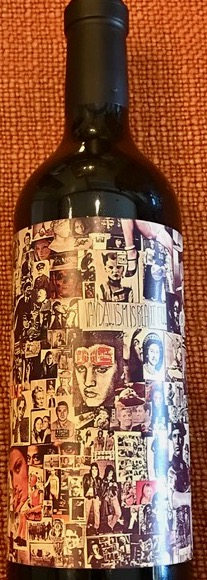
quilceda
If you’re one of those folks, you should really give Washington State another look. In a region of the country perhaps better known for producing cherries, hops, apples, apricots and RAIN, thousands of acres of grapes have been planted. And the wines produced from these grapes are truly exceptional.

In the past 40 years, the wine industry in Washington has exploded. In 1981, there were only 19 wineries in the state and today there are more than 900 scattered over 14 American Viticultural Areas (AVA’s).

Most of us who live east of the Rocky Mountains think of Seattle when we think of Washington State. But Seattle sits smack dab between the Cascade Mountains to the east and the Olympic range to the west, and has rain forest-like weather. And while there are a few vineyards in the Seattle/Puget Sound area, the overwhelming majority of wine is being produced from vines grown across the mountains in Eastern Washington.

So what makes this northwest corner of the U.S. so special? It’s the superb terroir
(pronounced tare-wah). Terroir is defined as the combination of soil, climate and geographic location that determine the quality of a wine appellation. Washington’s terroir is superior and suited for growing some of the world’s greatest wine grapes including, cabernet sauvignon, merlot, syrah, chardonnay, riesling, gewürztraminer and semillon.

Washington white wines are the equal to anything produced in California or Oregon, particularly the riesling, chardonnay and gewürztraminer. And the cabernets, merlots and syrahs are truly exceptional and can compete with wines produced from similar vines anywhere else.

In fact, Washington State produces one of my all-time favorite cabernet sauvignons - Quilceda Creek. It’s a very small production winery and has gained cult status from several 100-point scores regularly awarded to it by critics such as Robert Parker. I was fortunate enough to get on their mailing list 20 years ago. But there other equally good, red wines produced in Washington that are readily available and don’t take a back seat to any other region in the world.

That’s a pretty bold statement, but in addition to intensity, richness, elegance and power, Washington State red wines have the potential to achieve a qualitative attribute uncommon in many wine regions: balance.

Here are a few of my favorite labels from Washington State that you should find in wine shops around the state: Mercer Canyons; Kiona; Saviah Cellars; L’Ecole No. 41; Columbia Crest; Canoe Ridge; Hedges; Leonetti; Waterbrook; Quilceda Creek; Woodward Canyon; Covey Run; Milbrandt; Walla Walla; Chateau Ste. Michelle; Columbia Winery; DeLille Cellars; and Barnard Griffin Winery.

Summer foods: A sparkling idea!

Summer is a time to kick back and relax. Picnics, barbecues, back porch lounging and casual dining rule the day and that’s a very good thing. So the beverages we choose to match the lighter, fresher and more casual foods we consume this time of year should not only be delicious, but also refreshing too.

But nothing should require us to eliminate whatever style or type of wine we wish to drink. So if you prefer full-bodied reds with your barbecued chicken, go ahead and uncork one – just know that popping that bottle in the refrigerator for a half hour before you drink it will make the experience a whole lot more enjoyable.

But me? I prefer summer-style wines such as rose’, lighter whites like pinot grigio, sauvignon blanc or albarino and less intense reds such as Beaujolais, pinot noir or Dolcetto. But there is one particular type of wine that is my overall warm weather favorite and that’s because of its versatility with just about any food, and its overall refreshing nature.

This is a wine that goes equally well with fish, meat, veggies or fruit. You can match it with spicy foods like jalapeno pepper -infused dishes as well as delicate seafood entrees such as Dover sole. This wine is really good with popcorn, anchovies and pizza, and it punks any type of beer as the go-to beverage for chili, baby back ribs or even fried hot banana peppers.

img_3255
I’m talking about Champagne and sparkling wine! Yes, the wine that most of us only open on celebratory occasions is probably the most flexible beverage to use with just about any food – even a green salad with vinaigrette dressing. I am not a food chemist (though I have stayed at a Holiday Inn Express), but the refreshing fruity flavor and mouth cleansing bubbles seem to marry well with just about any dish.

We seem to forget how good sparklers are with everyday meals, especially those that are spicy, rich or salty. And you really do have a wide variety of reasonably priced domestic and international wines from which to choose such as Cava from Spain, Prosecco from Italy and Champagne-like wines from just about every wine-producing country including the US.

Here’s a little refresher on sparkling wine.  While many sparklers are made in the Champagne method, none can be called by that famous moniker unless they are produced from grapes grown in the region of Champagne in northern France.

If you recall, the Champagne method (or methode champenoise) is a process where still wines (traditionally pinot noir, chardonnay and pinot meunier) are blended and then put in a bottle to which yeast and a small amount of sugar are added. This causes the wine to go through a secondary fermentation and the result is a bubbly wine like Champagne. While Champagne is regarded as the gold standard, many other countries produce excellent sparkling wine using this method.

And while true Champagne (which is the most expensive of all sparkling wine) certainly deserves to be paired with decadent foods like foie gras or caviar, it and other sparklers are equally copasetic with just about any dish on the planet. Hey, if food could talk, don’t you think a spicy dish like chili would prefer to be paired with Champagne rather than that hoppy,foamy yellow stuff?

Champagne is priced from the mid thirties to upwards of hundreds of dollars a bottle. Here a few of my favorites priced under $60: Charles Heidsieck Brut Reserve; Nicolas Feuillatte Brut; Mumm Cordon Rouge Brut; Moet & Chandon Imperial; Veuve Cliquot (Yellow Label); and Perrier Jouet Grand Brut.

Sparkling wines (those made outside France, but using the Champagne method) priced under $30: Gloria Ferrer Brut; Schramsburg Brut; Domaine Carneros; Mumm Cuvee Napa; Domaine Chandon Reserve; Piper Sonoma Brut; Ste. Michelle Brut; Castillo Perelada Cava Brut Rosado; Dibon Cava; and Gustave Lorentz Cremant d’Alsace Brut Rosé.

Prosecco (these don’t use the Champagne method) priced from $10 - $20 a bottle: Santa Margherita; Ruffino; Zardetto; Lamarca; and Mionetto.

Salmon Italiano: great with vino rosso or bianco

If you live in or around Charleston and you enjoy fresh seafood, I know you’ve shopped at Joe’s Fish Market (304-342-7827) on the corner of  Brooks and Quarrier Streets. Two brothers – Joe and Robin Harmon- have been providing our area with fresh treats from the sea for decades.

I venture into Joe’s at least once a week when I’m “jonesing” for salmon. I’m not a fan of poaching the fish, but I really enjoy grilling or smoking salmon, and basting it with various concoctions. I actually do a riff on Joe’s hot smoked salmon, but I have to admit that it’s hard to beat the original version that Robin prepares each week on his smoker out behind the market.

At Joes, the hot smoked salmon is brined in water, salt, brown sugar and garlic for a few hours and then smoked for up to an hour over apple wood. They also use farm-raised salmon and recommend choosing it rather than wild caught salmon (like King, Coho, Sockeye, etc.) which tends to dry out if you’re not careful. Try a slab of Joe's hot smoked salmon and maybe you’ll be inspired, like I was, to experiment with different methods of preparing this exceptionally versatile fish.

salmon-italiano
Today, I’m going to share a salmon recipe that I've created which involves using a brine, a dry rub and then charcoal grilling the fish to delicious perfection. It’s a little time consuming, but really easy and definitely worth the effort. This recipe uses a charcoal, but you can use a gas grill by cooking the fish indirectly and using a smoke box.

And, of course, I’m recommending wines that will enhance your dining experience. In this case, you may select either a full-bodied white wine or medium-bodied red to pair with the dish. See my suggestions below.


Salmon Italiano
Ingredients
One salmon filet with skin on (usually 2 to 3 lbs)
One-half bottle of dry white wine (sip the rest while grilling)
Three quarts of cold water
One cup each of Kosher salt and light brown sugar
Four garlic cloves minced
One-half teaspoon each of crushed red pepper flakes and dried oregano
One teaspoon each of fennel seed and coarsely ground black pepper
Two teaspoons of extra virgin olive oil
One cup of apple wood chips

How To
Make a brine (in large pot) of the salt, sugar, water, wine and half the garlic
Stir and dissolve the brine ingredients and pour into a gallon baggie
Place salmon filet in brine making sure the liquid covers the fish
Put baggie into the pot and place in refrigerator for two to three hours
Soak wood chips in warm water for same amount of time
Remove salmon from brine and pat dry
Sauté the fennel seed in a dry pan until slightly toasted
Grind in a food mill (or use a large knife) to crush the fennel seeds
Rub olive oil all over fish and place on aluminum foil in a long oven pan
Rub the garlic, red pepper flakes, black pepper, oregano and fennel evenly onto filet
Make a charcoal fire and divide coals evenly on either side of the grill
Drain wood chips and place in and on charcoal fire
Place pan with salmon between the two piles of charcoal and put lid on grill
Keep grill vents wide open on top and bottom of the grill
Grill salmon for 15 minutes

Salmon is done when slightly firm to the touch

Wine Recommendations:
2014 Mer Soleil Santa Lucia Highlands Chardonnay ($30) This is a rich, yet perfectly balanced, chardonnay that has hints of vanilla on the nose and a creamy mouth feel with ripe apple flavors and refreshing acidity that marries well with the salmon.

2013 Castello Banfi Rosso di Montalcino ($27) Fruit forward, rich and medium-bodied sangiovese (Baby Brunello) that is full of dark cherry flavors with just a hint of oak on the finish. Great accompaniment to the Salmon Italiano.

Sampling Italian wine and food at the Source

I recently returned from an overseas trip where I ate and drank like Nero in and around a noble estate located in the hills not too far from Rome. And while I may be slightly exaggerating the quantities of food and wine I consumed, I did feel like Roman nobility since I stayed at a villa overlooking an Italian castle.

In fact, I had the privilege of staying at Villa DiTrapano, a beautifully appointed lodging facility located in the mountain village of Sezze about one hour southeast of Rome. Charleston Attorney Rudy DiTrapano and his family own the villa and a 17th century Castelletto (castle) on the property that is currently being restored. Check out their website at: www.villaditrapano.com/

SAMSUNG CSC
Rome is the capitol of Lazio (pronounced Lat-zee-oo) and of the entire country. Lazio is one of 20 states or provinces in Italy, but I had never visited any other part of this region near Rome. And I had certainly never experienced the wines of Lazio. But that changed very quickly as our group tasted our way through as many of the local wines as we could.

You’ve probably never heard of wines made from grapes such as nero buono (red) or bombino bianco (white), but these vines produce exceptionally good bottles of wine. Lazio also makes wines such as syrah and trebbiano that you probably have sampled, but when I’m in a new area, I love to drink the indigenous varieties.

lazio-vineyards
It always amazes me to discover that no matter where I travel, the best wines are the ones that are made from vines which are native to the area. Whether you’re in the Cori Valley of Lazio drinking bombino or in the Willamette Valley of Oregon sipping pinot noir, you won’t go wrong drinking local.

And every region and sub-region of Italy seems to be known for specialty foods. My wife and I also spent several days in Apulia along the heel of the Italian boot and reveled in the cornucopia of diverse food and wine. We visited and tasted our way through picturesque towns such Martina Franca that is the capocollo capital of Italy.

pasta-dish-in-puglia
In Martina Franca, we visited a butcher who demonstrated how capocollo is made. Meat from the neck of locally raised pigs is salted, marinated in a cooked wine with spices, stuffed in a natural casing, smoked and then hung to cure for up to six months. The resulting thinly sliced capocollo is a delicious treat, especially when accompanied by the full-flavored red wines of Apulia such as primitivo or negroamaro.

Back in Sezze, we were delighted by the quality of the local restaurants and the friendliness of the citizens, most of whom tolerated our feeble, but well-intentioned attempts to communicate with them in Italian. Fortunately, most everyone under 40 spoke English.

SAMSUNG CSC
And right outside the gates leading to Villa DiTrapano, we could walk and find everything, including fresh fruits and vegetables, meats and seafood, excellent bread, wines and spirits and mouth-watering pastries. We could not get enough of the small, circular, biscotti-type cookies called Taralli that were coated with cinnamon and sugar. Taralli produced in other regions can be seasoned with herbs and/or salt and pepper, but the Tarali made in Sezze were addictively sweet treats.

SAMSUNG CSC
 
The fully-equipped kitchen at Villa DiTrapano was too much of a temptation for us to ignore so we prepared our own feast of pasta with porcini mushrooms, sautéed hot and sweet peppers, grilled local Bisteca (rib-eye), fresh salad and – of course – bombino bianco and nero buono.

Oh, and we finished the meal off with little rounds of Taralli!

Thanksgiving Wines: many vinous choices!

At least once a week, I get asked this question: ‘What is your favorite wine?’ And my answer is always the same: “It depends.”

Now, you might think that’s a way of avoiding the question, but to me your query is incomplete unless you tell me what type of food you intend to pair with the wine. I simply don’t believe wine can be properly enjoyed just on the merits of its own flavors, aromas and textures – without some type of food context.

SAMSUNG CSC
But, if the question is stated in this manner: What is your favorite wine with, say, beef tenderloin? I might ask the how beef will be prepared? Will it be marinated, dry-rubbed (and with what spices) or just seasoned with salt and pepper? Will it be grilled, pan sautéed or oven roasted? Based upon your answers to those questions, I would then recommend several wines that would marry nicely with that particular treatment of beef tenderloin.

So with Thanksgiving only a week away, you can probably guess what question I’ve been asked lately. Well, there’s a problem in answering this one. But it’s a good problem for a wine lover to have. Why? Well, Thanksgiving dinner is about the easiest meal you’ll ever have for which to select the right wine. As a matter of fact, it’s almost impossible not to find at least one good wine and food pairing during this holiday meal.

For years, I‘ve touted the culinary versatility of turkey to be equally successfully paired with both white and red, as well as with light or full-bodied wines. The reason is the “National Bird” is blessed with meat that has different flavors, colors and textures. Add to this the way it is prepared – from traditional oven-baking, to deep frying, to grilling, to smoking (with hardwood such as apple) -and you have even more wine choices from which to select.

When you prepare stuffing to accompany the meal, you add a whole other flavor dimension which, depending upon the nature of the dressing, opens up even more wine possibilities. For example, one Thanksgiving I stuffed a charcoal grilled turkey with cornbread, Monterey jack cheese, ancho chili peppers and chorizo sausage. What wine, you might ask, did I serve with this non-traditional turkey and stuffing?

how_to_grill_a_turkey_with_rosemary_and_other_sauces
Well, I started with Beaujolais Nouveau as an aperitif, proceeded to open a bottle of pinot gris from Alsace for those who preferred white wine, and uncorked a full-bodied Alexander Valley zinfandel for those who preferred a big red. And guess what? It worked. For dessert, I selected a bottle of Mendocino County late harvest gewürztraminer to accompany the pumpkin pie. Then I plopped down on the couch to watch some other NFL team beat up the Detroit Lions.

For the traditional oven-roasted turkey with a chestnut, sage bread dressing, I suggest a light to medium bodied white wine such Soave or Arneis from Italy, a white Bordeaux or any steely, non-oaked chardonnay. For reds, with this meal, you might pair a pinot noir from the Sonoma Coast, a Chianti Classico from Tuscany, or a Chateauneuf du Pape from France. And older reds, such as a claret from Bordeaux, Brunello Di Montalcino from Tuscany or a California cabernet sauvignon, go nicely as well.

Whatever you choose, have a wonderful Thanksgiving!